AI Junk Journal Papers That Sell as Collections
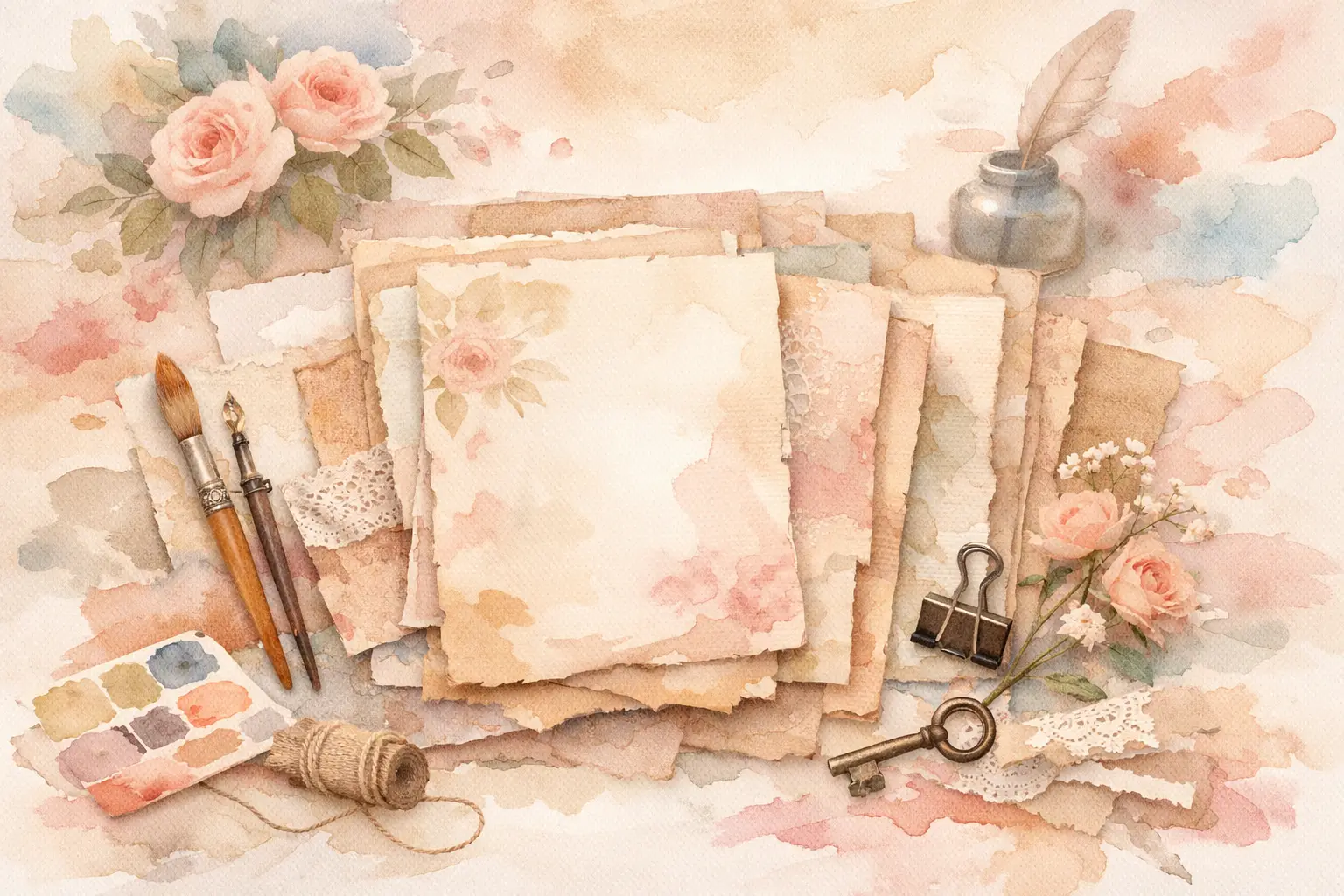
A buyer opens a junk journal kit because they want a creative world to work inside, not 18 random pages that happen to share a color. That is the opportunity with AI junk journal papers: you can turn one strong visual direction into a complete printable collection without spending a weekend searching for assets, adjusting layers, and trying to make every page match.
For an Etsy seller, the product is not just a pretty background. It is a usable set of choices. Customers want pages for writing, pages for layering, focal images for fussy cutting, and details that make a handmade journal feel personal. The more intentional the bundle feels, the easier it is to price, list, and sell.
What Makes AI Junk Journal Papers Worth Buying?
Junk journal customers use digital papers differently than scrapbook customers. Some pages become full spreads. Others are torn into strips, folded into pockets, printed as tags, or used behind ephemera. A successful collection gives them variety while keeping the visual identity steady.
That means a good bundle needs contrast. Include a few quiet papers with soft texture or faint writing areas, then balance them with busier collage pages, decorative patterns, labels, ledger-style elements, or faded botanical details. If every page is equally detailed, a buyer has nowhere to rest the eye or write. If every page is too plain, the kit can feel unfinished.
Theme also matters, but theme alone is not enough. “Vintage floral” is broad and crowded. “Dusty blue Victorian conservatory with seed packets, weathered labels, and handwritten correspondence” gives you a direction customers can picture. Specificity helps your collection stand apart while making it easier to create matching pages, covers, tags, and add-on listings later.
Start With a Collection Direction, Not a Single Image
The fastest way to create weak papers is to generate one page at a time with a new idea for each. You may end up with several lovely images, but they will not look like they belong in the same download.
Start by deciding what should remain consistent across the entire kit. Choose a core palette, an era or mood, two or three signature motifs, and a texture level. For example, a French garden collection might use faded sage, cream, and rose; old postage marks; clipped roses; and lightly distressed paper grain. A dark academia kit could lean into sepia, charcoal, burgundy, handwritten notes, bookplates, and moody library textures.
Then plan variation around that direction. One collection does not need 20 versions of the same floral page. It needs different jobs for the maker’s workspace: a writing paper, a patterned background, a layered collage, a document-inspired page, a high-detail focal page, and a page designed to be cut apart.
Before generating, map your first set of assets. A practical starter bundle might include:
- 4 subtle background papers for journaling and layering
- 4 medium-detail patterned or document-style papers
- 4 collage or scene-based focal pages
- 4 cut-apart pages with labels, tickets, tags, or mini cards
- 2 cover options that make the bundle feel finished
This structure keeps the download useful without forcing you to invent a new style for every file.
Create for Print, Not Just for the Preview
A design can look beautiful on a screen and still disappoint when printed. Etsy buyers notice muddy details, unreadable text, weak contrast, and files that do not print at the expected size. Build the printable product first. The listing images come after.
For full-page junk journal papers, letter size is a familiar choice for US customers: 8.5 by 11 inches. At 300 DPI, that means a final file size of 2550 by 3300 pixels. This gives buyers sharp results on home printers and creates a clear expectation in your listing.
Watch your edges, especially when using collage elements. Important labels, faces, words, and decorative frames should sit comfortably inside the page rather than cling to the trim line. Home printers vary, and many buyers print with small non-printable margins. A slightly forgiving layout is more useful than a design that depends on edge-to-edge perfection.
Text deserves extra caution. AI-generated lettering can look atmospheric, but it is often not readable enough for functional labels or journal cards. Use AI text as a visual texture when it suits the piece. For titles, instructions, and anything a customer needs to read, add clean text in a layout editor afterward.
Color is another trade-off. Deep black backgrounds and saturated full-page art can look dramatic, but they use more ink and can be less appealing to home printers. A richly aged look does not require heavy ink coverage. Cream, parchment, faded color washes, and distressed overlays often print beautifully while staying practical for customers.
Build Cohesion Without Making Every Page Identical
Consistency is what makes a digital kit feel premium. Repetition is what makes it feel padded. The difference comes from using a small visual system rather than copying one composition.
Repeat a few recognizable ingredients across the collection: the same paper age, recurring ink color, similar floral species, related stamps, or a consistent illustration style. Then vary the composition. One page can feature a central postcard, another a border of pressed leaves, and another a faded ledger with a barely visible botanical overlay. They still feel connected because the materials speak the same visual language.
This is where a collection-first workflow saves real time. Instead of generating, downloading, editing, and naming every page manually, you need a system that can carry a style across multiple formats. InkEngine is built around that outcome: begin with one idea or reference image, then create coordinated, print-ready assets for a sellable collection rather than a folder of unrelated experiments.
You should still review every output. Automated production removes repetitive execution, not your taste. Remove pages that feel off-theme, duplicate the strongest direction, and make sure the final assortment gives customers a reason to use the whole kit.
Turn One Theme Into More Etsy Inventory
A well-planned junk journal paper bundle can do more than fill one listing. It can become the center of a small product line, as long as each product gives the buyer a clear new use.
Your main kit might include 16 or 24 printable papers. From the same visual direction, create a journal cover set, a printable ephemera pack, a tag sheet, a set of digital stickers, or a smaller sampler. You can also build a seasonal follow-up collection using the same shop-friendly style - spring greenhouse, summer wildflower market, autumn herbarium, and winter correspondence, for example.
Do not simply split one bundle into smaller listings and call it a product line. Buyers can spot a thin offer. Instead, use the core theme to create purpose-built formats. Papers are for backgrounds and pages. Ephemera is for cutting and layering. Covers are for finishing a journal. Each item should stand on its own while looking good together in a larger bundle.
This approach also makes your shop easier to browse. A buyer who loves one collection can recognize its related pieces immediately. That recognition is branding, even if your visual identity is still growing.
Package the Download Like a Reliable Seller
The design work is only half the product. Your files and listing details determine whether the customer feels confident clicking Buy.
Use clear, organized filenames that make sense after download. Avoid vague names such as final2 or paper-new. Name files by theme and page type, such as greenhouse-paper-01 or greenhouse-tags-01. If the file size requires multiple folders or ZIP files, label them so buyers know exactly what they are opening.
Your listing images should show the pages at readable scale and in use. A full-page preview proves the artwork. A close crop shows texture. A styled journal spread helps a buyer imagine the result. Include a simple image that states page count, print size, file type, and whether the purchase is a digital download. Clear expectations reduce avoidable messages and poor reviews.
Be precise about what is included. If the kit contains 20 letter-size JPG papers, say that. If it includes PNG cut-aparts, say that too. Do not promise editable files unless customers can actually edit them. Straightforward product details build more trust than oversized claims.
Give Your Best Ideas Room to Grow
The sellers who build momentum with AI junk journal papers are not chasing every aesthetic at once. They choose a direction, make it useful, and turn it into a repeatable production habit. One focused collection can create a stronger listing, several related products, and a recognizable look for your shop.
Pick a theme your buyer can almost smell, plan pages around how they will actually journal, and leave enough creative space for the paper to become part of their story. That is how a quick idea turns into inventory worth coming back for.
Fill your shop with a matching collection this weekend.
Start your first collectionFree to start. No credit card.