How to Build Themed Sticker Packs That Sell
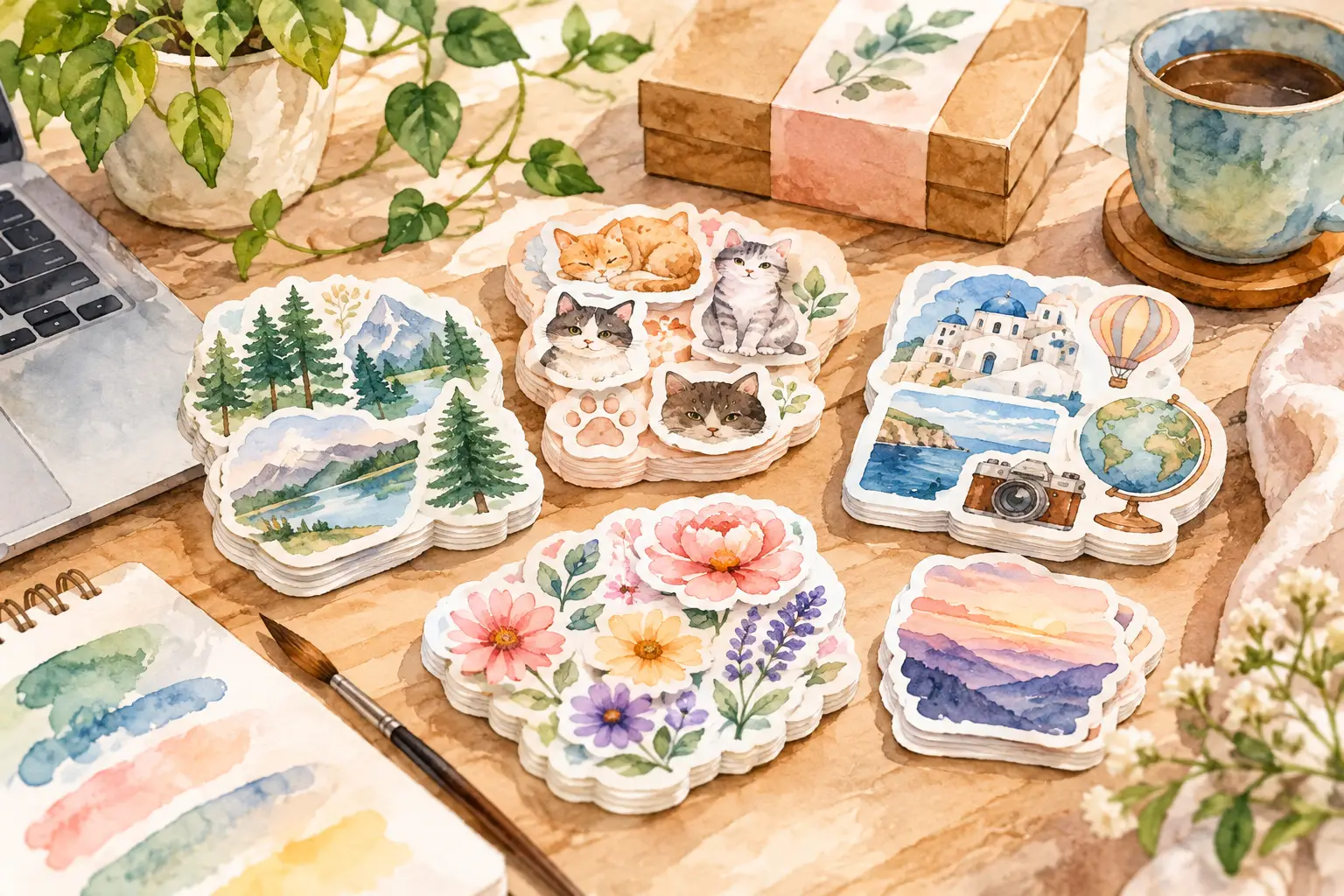
A sticker pack with 30 random designs is not a bundle. It is 30 chances for a shopper to wonder whether the files belong together. When you build themed sticker packs around one clear buyer idea, every design reinforces the listing, the thumbnail looks stronger, and the customer can picture exactly where they will use the stickers.
For an Etsy shop, that difference matters. A cohesive pack can serve journalers, planner users, teachers, small-business owners, or parents without requiring you to create a completely new visual direction for every file. The goal is not to make more stickers just to raise the count. The goal is to create a collection that feels complete enough to buy now.
Start With a Buyer Moment, Not a Generic Theme
“Cute animals” is a style category. “Cozy woodland animals for fall journaling” is a product direction. The second idea tells you what to make, what colors to use, and what a shopper expects to receive.
Before generating anything, picture the moment your customer is buying for. Maybe they are decorating a digital planner for October, packing teacher reward stickers, creating a baby shower favor, or building a junk journal around a seaside vacation. Strong themes have a use case, a mood, and a recognizable visual world.
A useful formula is: subject + occasion or use case + style. For example, “retro gardening labels for spring planners,” “pastel bookshop stickers for reader journals,” or “western birthday party stickers for favor bags.” You do not need a complicated trend report to use this. You need a direction specific enough that the next 20 designs are obvious.
Be careful with themes that are too narrow, though. A pack based on one highly specific phrase may make a great single sticker but not a versatile bundle. Aim for a theme with enough visual material to support characters, objects, labels, accents, and decorative fillers.
Plan the Pack Before You Create It
The fastest way to create a weak bundle is to generate the same subject over and over. You may end up with 12 coffee cups, all cute, but with no supporting stickers that help the buyer actually decorate a page.
Give your collection roles. A practical themed pack usually includes hero designs that grab attention, supporting objects that build out the scene, small filler elements for spacing, and a few functional or text-based pieces when they fit the audience. A cozy reading pack, for instance, might include a stack of books, a reading girl, a bookstore storefront, bookmarks, candles, glasses, stars, and short phrases such as “one more chapter.”
You do not need every pack to follow the same formula. Planner stickers may need boxes, labels, and date-friendly icons. Printable sticker sheets for kids may need bigger, bolder character designs. Clip-art-style sticker bundles often benefit from a wider range of standalone objects. The buyer’s intended use should decide the mix.
It also helps to choose a realistic pack size before production. Fifteen polished designs can outperform 60 repetitive files. If you offer a larger bundle, make sure the count creates real variety instead of padding. Shoppers notice when one image has simply been recolored six times.
Build Themed Sticker Packs With a Visual System
Theme alone does not create cohesion. Your stickers also need to look like they came from the same illustrator, on the same good creative day.
Set a simple visual system before you start: a limited color palette, one line weight, one shading approach, and one overall level of detail. If your main artwork is soft watercolor with muted colors, do not add sharp neon icons halfway through the pack. If the characters have thick white borders and rounded features, keep that treatment consistent across the smaller objects.
This is where a collection-first workflow saves serious time. Rather than prompting each sticker independently and hoping the results match, begin with a single creative direction or reference image and generate coordinated variations from it. InkEngine’s Autopilot workflow is built for that kind of production: one idea becomes a planned series of related assets instead of another pile of disconnected experiments.
Consistency does not mean every sticker should look identical. Variation keeps a pack useful. Change poses, object angles, facial expressions, and supporting details while holding onto the shared palette, style, and mood. Think of it like a product line, not a set of duplicates.
Use a recognizable anchor
Most memorable packs have one or two anchor elements. These might be a character, a recurring animal, a signature flower, a vintage truck, or a particular type of lettering. Repeat that anchor lightly across the collection so the buyer can recognize the pack at a glance.
For example, a “farmers market” pack could feature a friendly strawberry character in several places, but the rest of the collection should still include baskets, produce, signs, flowers, and market details. The character gives the bundle personality. The supporting assets give it usability.
Finish the Files Like a Product, Not a Preview
A beautiful image becomes frustrating fast if the buyer has to fight a messy background or fuzzy edges. Digital-product sellers win trust by making the files easy to use the moment they are downloaded.
For individual digital stickers, transparent PNGs are often the most flexible format. They let buyers place artwork over planner pages, journal spreads, digital notebooks, and their own projects without manually removing a background. Clean cut lines matter, especially around hair, leaves, lettering, and tiny decorative details.
Check every file at full size before exporting. Look for accidental background pixels, cropped edges, odd shadows, mismatched outlines, or low-resolution details that looked fine in a small preview. If you are selling printable sheets, plan the sheet layout intentionally and make sure the finished file is suitable for printing at 300 DPI. If you are selling separate digital stickers, organize the files so buyers can quickly find what they need.
The product promise should match the delivery. Do not show a sticker sheet in listing images if the customer receives only loose PNGs, and do not imply physical stickers if you sell a digital download. Clear file details reduce refund requests and help your reviews stay focused on the art instead of confusion.
Make the Listing Sell the Collection
Your listing images should answer the shopper’s first question in seconds: what is this pack for? Lead with a clear cover image that shows the theme, visual style, and the strongest few stickers together. Tiny individual previews are rarely enough to communicate value.
Then show variety. Include a full-pack view, a close-up of the hero designs, and an example of the stickers in use. A reader-journal bundle should look at home on a digital journal page. A classroom reward set should be shown in a kid-friendly reward-chart context. You are not just displaying files. You are helping the buyer imagine the finished result.
Your title and description should use the phrases your buyer already uses, such as digital planner stickers, printable sticker sheet, journal stickers, or PNG sticker bundle, but only where they are accurate. Keep the product details practical: number of designs, file types, whether backgrounds are transparent, print recommendations, and what is included. A strong theme gets the click. Clear information earns the purchase.
Price based on usefulness and finish, not just sticker count. A compact, tightly art-directed pack can command more confidence than a giant folder of uneven images. It depends on your niche, the complexity of the artwork, and whether the files solve a specific creative need.
Turn One Theme Into More Shop Inventory
The best sticker themes should not end at one listing. Once you have a cohesive visual direction, you have the foundation for related products: a sticker sheet, a larger PNG bundle, matching clip art, planner covers, journal papers, wall art, or print-on-demand designs. That does not mean you should launch everything at once. It means your creative work can keep earning instead of disappearing into a single listing.
Start with the product your buyers are most likely to understand, then expand based on what gets clicks, favorites, and sales. If a cozy mushroom sticker pack performs well, that is a signal to test a matching autumn journal kit or clip-art collection. If it gets views but no sales, the issue may be the thumbnail, product positioning, price, or audience fit - not necessarily the artwork.
A themed sticker pack is a small product, but it can be a smart production system. Choose one clear buyer moment, make every design belong, finish the files cleanly, and give shoppers an easy reason to use the bundle. That is how a single idea becomes inventory your shop can build on.
Fill your shop with a matching collection this weekend.
Start your first collectionFree to start. No credit card.